
4 Tips for Talking with Dentures
December 3, 2025
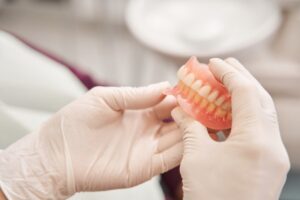
Adjusting to dentures can take time, and one of the most common challenges new wearers face is speaking clearly and confidently. Dentures can slightly change how your tongue, lips, and cheeks move, which may affect pronunciation at first. The good news is that with practice and the right strategies, clear speech usually returns quickly. Here are 4 helpful tips for talking with dentures.
1. Practice Speaking Out Loud
One of the best ways to improve speech with dentures is simple practice. Reading aloud, repeating difficult words, or speaking in front of a mirror can help your mouth adjust to the feel of your dentures. Focus on words with “s,” “f,” and “th” sounds, as these are often the most challenging at first. Regular practice helps retrain your tongue and lips to work with your dentures more naturally.
2. Speak Slowly and Clearly
When you first start wearing dentures, slowing down your speech can make a big difference. Speaking too quickly may cause dentures to shift or click, making words harder to pronounce. By speaking deliberately and clearly, you give your mouth time to form sounds properly and maintain better denture stability. As your confidence grows, your normal speaking pace will return.
3. Use Denture Adhesive if Needed
If your dentures feel loose while talking, a denture adhesive can provide added stability. Adhesives help reduce movement and improve confidence during conversation, especially in social or professional settings. While adhesive can be helpful, it shouldn’t replace a proper fit. If you rely on adhesive daily or still experience movement, your dentist may need to adjust or reline your dentures.
4. Stay Hydrated and Manage Dry Mouth
Saliva plays an important role in speech by helping dentures stay in place and allowing smooth tongue movement. Dry mouth can make talking with dentures more difficult and uncomfortable. Drink plenty of water throughout the day and avoid excessive caffeine or alcohol, which can worsen dryness. If dry mouth persists, ask your dentist about saliva substitutes or other solutions.
Be Patient with Yourself
It’s normal to feel self-conscious when first learning to speak with dentures. Remember that your mouth needs time to adapt. Most people notice significant improvement within a few weeks of consistent wear and practice.
When to See Your Dentist
If speech difficulties persist or dentures continue to shift while talking, schedule a dental visit. Poorly fitting dentures can affect both comfort and clarity of speech.
Talking with dentures becomes easier with practice, patience, and proper fit. By practicing aloud, speaking slowly, using adhesive when necessary, and staying hydrated, you can regain clear, confident speech and feel comfortable communicating in any situation.
About the Author
Dr. Jacob Milner earned his dental degree at the University of Maryland School of Dentistry while completing an externship at Kernan Hospital at the University of Maryland. Afterwards, he practiced for 6 years as an associate dentist. Over his career, Dr. Milner has completed advanced training in many areas of dentistry, including dental sleep medicine, while also earning a fellowship with Implant Pathway. If you’re interested in dentures, we can help! Schedule an appointment online or call (410) 390-0277.
No Comments
No comments yet.
RSS feed for comments on this post.
Sorry, the comment form is closed at this time.