
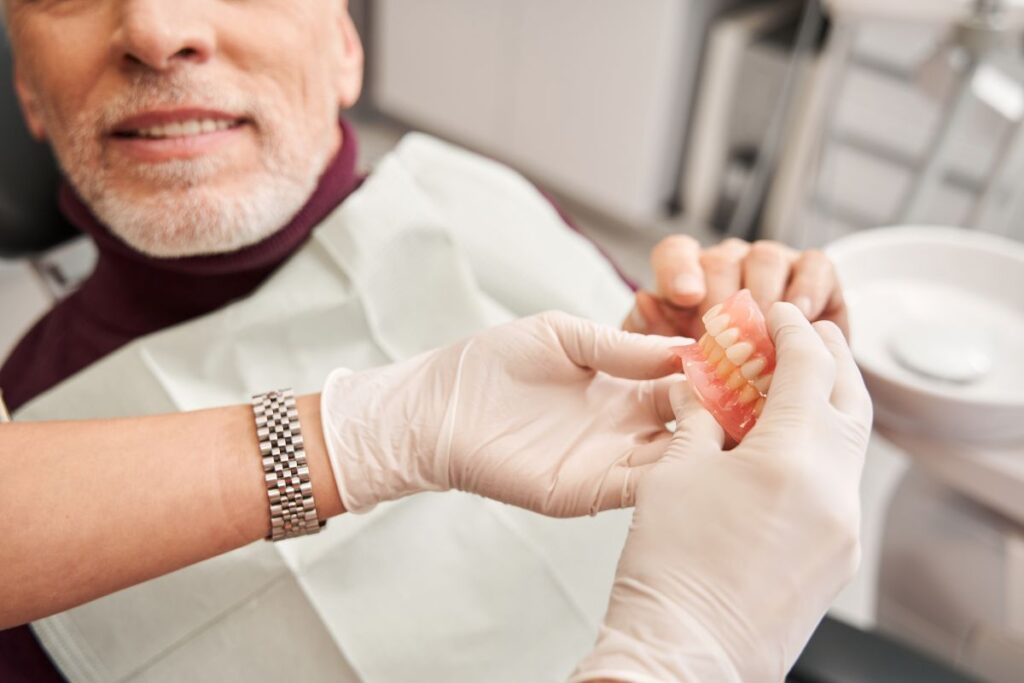
When your dentures don’t fit right, it can make everyday tasks you’ve grown accustomed to a challenge. Whether it’s eating tougher-textured foods, speaking clearly, or smiling confidently, if your restorations don’t have a secure hold or slip and slide while in use, wearing them can be extremely frustrating. But while all these problems are difficult enough, there’s one more hidden danger of ill-fitting dentures you may not have known about: an increased risk of developing oral cancer. Here’s a closer look at how wearing dentures that don’t fit properly can increase your odds of this deadly disease, and what you can do to protect yourself.
How Do Dentures Work?
How your denture stays in place depends on which arch it’s worn on. For the upper jaw, it secures via natural suction. Using a thin layer of your body’s own saliva, the prosthetic covers the roof of your mouth and generates a vacuum seal that keeps it secure during use. For the lower jaw, your denture must accommodate the tongue, and thus can only cover the arch itself, meaning that it must rely on muscle control from your cheeks, lips and tongue to remain in place.
Thankfully, your dentures are custom made to fit your mouth, so as long as they are in good condition, they should be comfortable and easy to use and should never move around or shift out of place.
When Dentures Lose Their Fit
Although your dentures were designed to withstand a variety of important activities like eating, speaking, and smiling, they weren’t meant to last forever. In fact, the average pair typically must be replaced within five to seven years. Warning signs that it may be time to upgrade include a poor fit, shifting, clicking noises when in use, and even wear and tear on the prosthetic such as broken teeth or cracks in the base. If you are experiencing any of these, schedule a visit with your dentist.
While poorly fitting or damaged dentures are certainly frustrating, not replacing or repairing them quickly can cause more than just an annoyance. Not only will a bad hold make it harder to use your restoration, but studies have shown that there could be a connection between poorly-fitting dentures and an increased risk of oral cancer. This is because a bad hold can allow dangerous things like tobacco particles and even alcohol to become trapped between the dentures and your gums, prolonging your exposure.
How to Protect Against Denture Disaster
While it may be out of your control if your dentures change shape over time, there are many things you can do to help keep them in excellent condition for as long as possible, including:
- Always remove your dentures after each meal to brush them with a soft-bristled toothbrush and mild hand soap or denture cleanser. Be sure to rinse them well before returning them to your mouth.
- Floss your dentures daily.
- When you’re not wearing your dentures, be sure to leave them soaking in a glass of water or denture soak so they don’t dry out and lose their shape or develop cracks in the acrylic.
- Always take your dentures out when you go to bed. Never sleep with them in your mouth!
Additionally, if you do notice that your dentures have become damaged, whether it be a chip, crack, or if they simply stop fitting securely, be sure to schedule an appointment with your dentist. In some cases, you may only need a re-line or repair, however if it’s been about five years since you’ve had them, it may be time to replace them. Your dentist can help determine the best solution at your consultation.
Remember, dentures should fit comfortably and securely. If yours have started to shift, click, or feel uncomfortable, or if they have incurred damage such as chips, cracks, or wear, it’s time to schedule an appointment with your dentist to bring back your healthy, beautiful, pain-free smile!
About Dr. Milner
Dr. Jacob Milner earned his dental degree at the University of Maryland School of Dentistry. He has received additional training in dental sleep medicine, Invisalign, and has even earned a fellowship restoring smiles with Implant Pathway. To schedule an appointment for dentures at Dolfield Dental of Owings Mills, visit our website or call us today at 410-390-0277.